- Home
- >
- News
- >
- Trade News
- >
- PVC Cable Duct for Saudi Arabia and UAE: What a One-Line Spec Really Decides
PVC Cable Duct for Saudi Arabia and UAE: What a One-Line Spec Really Decides
A Saudi or UAE cable schedule often arrives as one line: PVC Cable Duct, 40 by 20, white. Gulf sites run hot, dusty and fast: an indoor-grade compound softens on a sunlit wall, a loose cover lifts in a sand-laden corridor, and duct passed off in a mild climate can distort before the first fix.
Specifiers therefore treat Cable Trunking as a site system, not a plastic channel. One run may cross an air-conditioned plant room, an unconditioned car park and a facade shaft that cooks at midday. Write in UV resistance, wall tolerance and lid retention and the quotes become comparable.
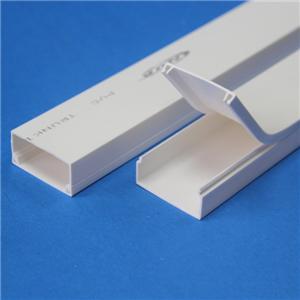
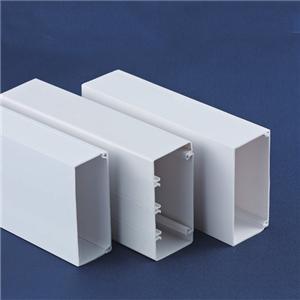
Size language comes first. A PVC Cable Duct is named by outer width and height, 20 by 10 for a data drop, 40 by 25 for lighting, up to 100 by 50 for a riser, and by its cover: snap, slide or screw. Solid covers suit clean ceilings, slotted ones vent heat. Ask for the internal bore, not the nominal shell.

Then read the material. A Gulf order should state the compound, its flame behaviour under BS 476 or IEC 61084, and wall thickness with tolerance, not a catalogue number. Wire Duct inside a panel follows the same logic: a seated fine-slot lid survives vibration; a brittle offcut cracks when reopened.
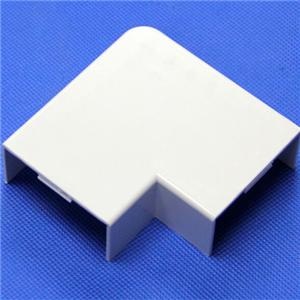
Consistency is the hidden cost, decided at the machine. G AND N FORTUNE LIMITED runs 35 extrusion lines for duct and conduit bodies and 55 injection molding machines for the elbows, tees and couplers that close the run. Base, lid and fittings come off one planned batch, so a cover still snaps onto a base on a dusty floor.

Twenty years of export work sit behind that matching, under British Standard practice Gulf consultants know. Samples come from the run that will fill the container, not a showroom box, and wall thickness is checked at the spigot. Buyers who walk the extrusion hall and the injection shop often turn a first order into a frame deal.
A clean Saudi or UAE enquiry names five things: duct size and profile, cover style, compound and flame rating, wall thickness with tolerance, and fitting ratio per hundred metres. Add the site condition, indoor conditioned, shaded external or sun-exposed, and the quote stops being a guess. State carton counts too.
Documentation closes the loop. Request the BS test report, a batch number tied to the cartons and a one-metre sample from the actual run before the balance ships. Say whether cartons must read PVC Cable Duct or Cable Trunking to match the tender wording, since a mislabelled carton can be held at a Gulf store even when the product is right.