- Home
- >
- News
- >
- Trade News
- >
- PVC Electrical Conduit for Slab and Block Wall Wiring: Bending, Jointing and Cable Pulling on Site
PVC Electrical Conduit for Slab and Block Wall Wiring: Bending, Jointing and Cable Pulling on Site
In apartment blocks and commercial buildings, cables are hidden inside slabs and block walls, and the service life of the whole installation is set by the PVC conduit that carries them. A channel that cracks, flattens or loses its socket during casting becomes a blocked route that nothing can be pulled through later.
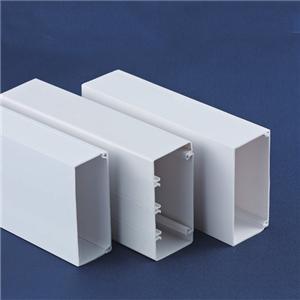
That is why contractors in Nigeria, Ghana, Saudi Arabia and Thailand specify plastic conduit instead of a thin-wall pipe bought on appearance. Wall thickness, compound and socket depth decide whether the run survives compaction and vibration — and whether a bending spring leaves it round or creased.
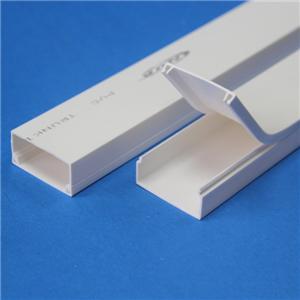
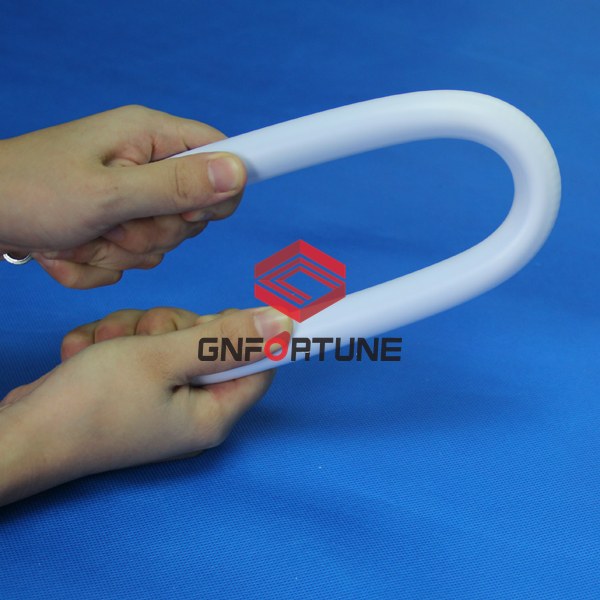
Site bending is where a good PVC electrical conduit shows its quality. Cold bending with an internal spring is the fastest way to form offsets and small changes of direction; a heat gun or hot-water bath suits tighter radii. Keep bends generous, never reheat the same point, and never pull a spring through a joint.
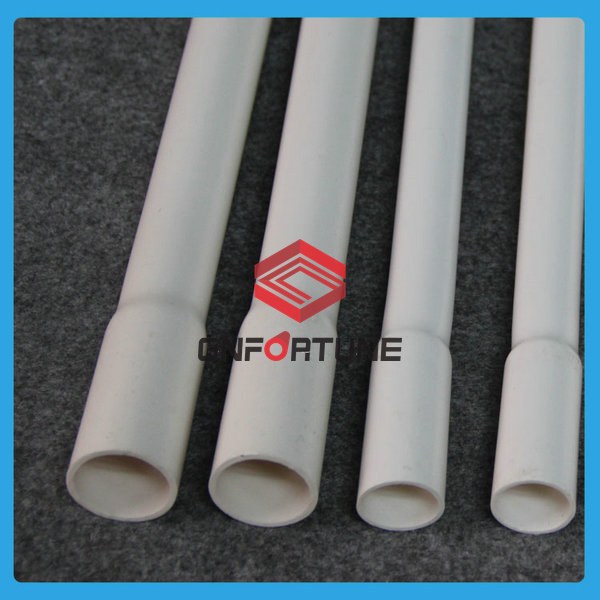
Joints are the second weak point. Conduit PVC normally comes with one socketed end, welded to the plain end of the next length by solvent cement. Push fully home, wipe the excess, and stagger joints so the run cannot hinge at one line; where a length is shortened, cut square and ream the bore.
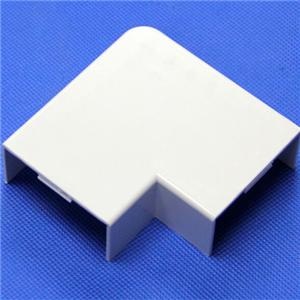
Then the route has to stay pullable. Fit a 90 degree elbow and a draw box at every corner, clip at the spacing the diameter calls for, and cap open ends before the pour so mortar stays out. Leave a draw cord in long runs and check the bore with a mandrel.
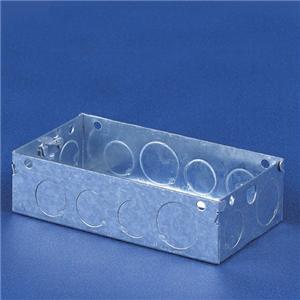
G AND N FORTUNE LIMITED has spent 20 years exporting conduit systems, running 35 extrusion lines for pipe and 55 injection molding machines for elbows, couplers, junction boxes and metal boxes. Pipe and fittings come from one plant, so socket tolerances match.
Production follows British Standard (BS) requirements for conduit systems, with regular containers to Nigeria, Ghana, Saudi Arabia, the UAE, Malta and Thailand.
A clear enquiry speeds the quotation: state the diameter — 16, 20, 25, 32, 40 or 50mm — the gauge, whether lengths need a socket end, and the colour for exposed work. Add about ten percent extra elbows, couplers and boxes, because site changes happen at corners and risers.
Ask G AND N FORTUNE LIMITED for a sample length, a wall-thickness and compound data sheet, and one packing list covering electrical conduit PVC pipe, couplers and junction boxes. Concealed wiring is judged years later, when a cable must still pull through.