- Home
- >
- News
- >
- Trade News
- >
- PVC Electrical Pipe for Solar Street Light Projects: Protecting DC Cables from Panel to Pole
PVC Electrical Pipe for Solar Street Light Projects: Protecting DC Cables from Panel to Pole
Across Nigeria, Ghana, Saudi Arabia and Thailand, a solar street light is judged by the light it gives at midnight, yet most failures never start in the lamp or the panel. They start in the cable run between them, where DC conductors sit buried with nothing over them but backfill.
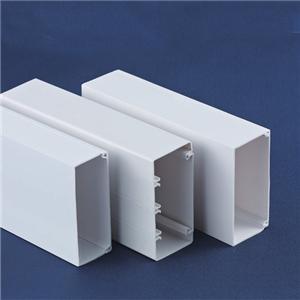
A PVC electrical pipe gives that circuit a permanent path: a smooth bore that lets crews pull or replace cable years later, a wall stiff enough to resist crushing under a road shoulder, and a material that will not rust in wet soil or break down beside fertilizer-rich ground.
Sizing starts with the circuit. A single pole is usually wired in 20mm or 25mm conduit, while feeders serving a whole road step up to 32mm, 40mm or 50mm. Keep roughly forty percent of the bore empty so cable pulls easily, heat escapes, and a spare run has somewhere to go.
Specifications should name a standard, not just a diameter. Conduit systems for cable management are classified under BS EN 61386 by resistance to compression, impact and temperature, so a trench under a driveway and a run clipped to a wall are genuinely not the same product.
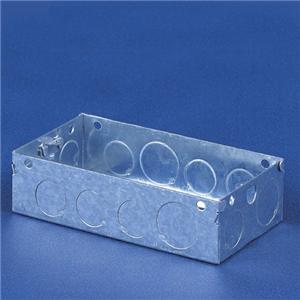
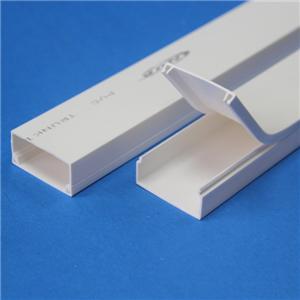
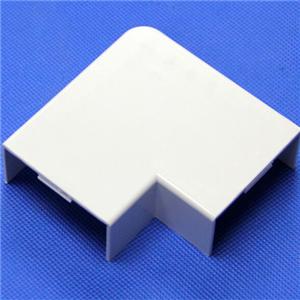
Accessories finish the route. A weatherproof junction box at each pole base keeps the joint between buried conduit and the luminaire lead sealed and serviceable, while PVC trunking carries cabling along compound walls or inside pump rooms where round conduit looks unfinished.
G AND N FORTUNE LIMITED makes the whole route: 35 extrusion lines for PVC electrical pipe, trunking and profiles, and 55 injection molding machines for junction boxes, clips and fittings, backed by 20 years of export experience and British Standard (BS) aligned production.
Because conduit, trunking, junction boxes and solar street light fixtures leave the same plant, a contractor fills one container instead of chasing four suppliers. Shipments serve West Africa, the Gulf, Malta and Thailand, with export packing built for long sea voyages and humid ports.
Installation is simple when the trench is right: keep consistent depth, bed the conduit on sand or fine soil, solvent-weld every socket, leave a draw cord in the bore, and seal the pole-base box against water and insects before backfilling in layers.
When ordering, state the outside diameter, the conduit class for the ground conditions, colour and length, then add about ten percent for cuts and changes. Ask G AND N FORTUNE LIMITED for samples and matched packing lists, and let 20 years of export record and BS certification stand behind every carton.